sp
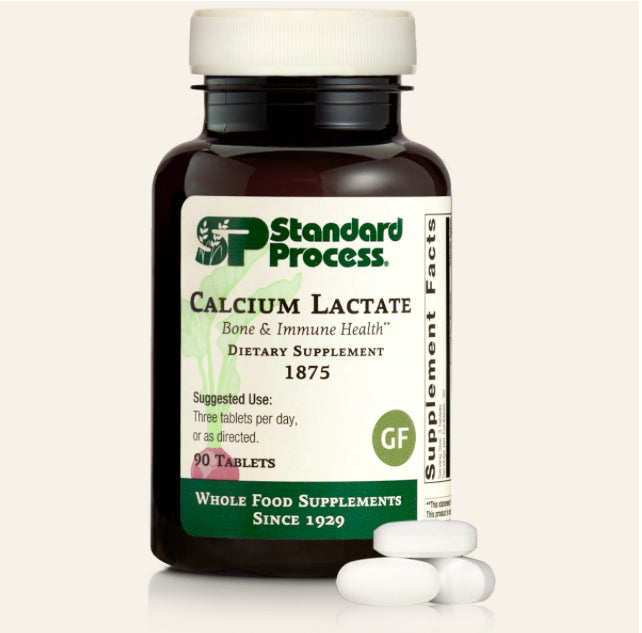
乳酸钙片,90-360片
乳酸钙片,90-360片
无法加载取货服务可用情况
- 支持肌肉和神经功能
- 支持细胞和细胞膜的正常功能
- 支持正常的血液凝固过程
- 支持酶系统的正常运作
- 支持并帮助维持健康的骨密度和骨重塑
- 为免疫系统反应功能提供支持*
- 充足的钙质,作为健康饮食的一部分,再加上体育锻炼,可以降低晚年骨质疏松症的风险。
- 钙的极佳来源
- 镁的良好来源
- 纯素、素食、无麸质、无乳制品、无大豆
为什么乳酸钙有效
乳酸钙含有每日建议钙摄取量的 20%(来自乳酸钙和硬脂酸钙)和每日建议镁摄取量的 12%。
这两种矿物质对人体许多代谢功能和过程都至关重要,然而美国大部分人口却难以达到这两种矿物质的建议摄取量。
乳酸钙有助于维持健康的骨密度
骨骼重塑(骨转换)是一个持续的循环过程:在身体不需要骨骼的部位,破骨细胞负责分解旧骨;而在不需要骨骼的部位,成骨细胞则负责重建新骨。 ¹换句话说,骨骼本身也不断重塑,钙质不断被吸收并沉积到新骨。骨吸收和骨沉积之间的平衡对骨骼健康至关重要,并且会随着年龄的增长而变化。
钙和镁对骨骼健康都至关重要。人体99%的钙都储存在骨骼和牙齿中,它们支撑着正常的骨骼结构和功能。补充钙剂有助于增加体内钙的含量。
镁也参与骨骼的结构发育,骨骼中镁的含量占50%至60%。 <sup> 3 </sup> 具体而言,镁参与骨骼形成,并影响成骨细胞(骨骼重建)和破骨细胞(骨骼分解)的活性。 <sup> 4 </sup>
乳酸钙对免疫系统健康有益
钙和镁都参与维持人体健康的免疫系统。钙离子(Ca²⁺ )信号控制多种细胞功能,例如T淋巴细胞。 T淋巴细胞与其他免疫细胞一起,对体内的外来颗粒做出反应。这些T细胞在骨髓中产生,对细胞介导的免疫至关重要,它们需要持续的钙离子流来调节、激活和增殖。
新兴研究表明,镁可能通过镁转运蛋白等途径参与人体免疫系统反应。目前在免疫细胞中已鉴定出多种镁转运蛋白,如镁转运蛋白1 (MagT1)。 <sup> 6</sup> MagT1在脾脏、胸腺、T细胞和B细胞中均有表达,提示MagT1可能参与人体免疫系统功能。 <sup> 7</sup>
乳酸来自牛奶吗?
“乳酸盐”这个词听起来和“乳糖”很像,你可能会认为它来自牛奶,但事实并非如此。乳酸钙是一种非乳制品。
乳酸钙中的“乳酸根”是乳酸的钙盐。乳酸是糖类细菌发酵的副产物,并非来自牛奶。
参考文献
1. Wardlaw GM, Hampl JS, DiSilvestro RA. 营养学展望。第6版。纽约:麦格劳-希尔高等教育出版社;2004。
2. 维生素D和钙膳食参考摄入量审查委员会,食品与营养委员会,医学研究所。钙和维生素D膳食参考摄入量。华盛顿特区:国家科学院出版社,2010。
3. 医学研究所(IOM)。食品与营养委员会。膳食参考摄入量:钙、磷、镁、维生素D和氟化物。华盛顿特区:国家科学院出版社,1997。
4. https://ods.od.nih.gov/factsheets/Magnesium-HealthProfessional/
5. Oh-hora M, Rao A. T淋巴细胞中的钙信号传导。 Curr Opin Immunol. 2008年6月;20(3): 250–258. 6
. Schmitz C, Perraud AL. 第26章 - 镁与免疫反应,编者:James F. Collins。 《主要和微量矿物质的分子、遗传和营养方面》,学术出版社,2017年,第319-331页。 7
. Al Alawi AM, Al Badi A, Al Huraizi A, Falhammar H. 第六章 - 镁:最新研究与进展。编辑:NA Michael Eskin。 《食品与营养研究进展》,学术出版社,第96卷,2021年,第193-218页。
建议用法:
每日三片,或遵医嘱。
营养成分及食材
每份(3 片)含:热量 5 卡路里,总碳水化合物 1 克,钙 260 毫克,镁 50 毫克。成分:乳酸钙、柠檬酸镁和硬脂酸钙。
请以产品标签上的信息为准,以取得最准确的产品信息。
*这些声明未经美国食品药品管理局评估。这些产品并非旨在诊断、治疗、治愈或预防任何疾病。
- Supports muscle and nerve function
- Supports normal functions of cells and cell membranes
- Supports normal blood clotting process
- Supports proper functioning of enzyme systems
- Supports and helps maintain healthy bone density and remodeling
- Provides support in the immune system response function*
- Adequate calcium as part of a healthful diet, along with physical activity, may reduce the risk of osteoporosis in later life
- Excellent source of calcium
- Good source of magnesium
- Vegan, vegetarian, gluten-free, non-dairy, non-soy
Why Calcium Lactate Works
Calcium Lactate contains 20% of the daily recommended value of calcium (from calcium lactate and stearate) and 12% of the daily recommended value of magnesium.
Both of these minerals are essential for a number of metabolic functions and processes in the body, yet much of the U.S. population struggles to meet the recommended amount of either mineral.
Calcium Lactate for Maintaining Healthy Bone Density
Bone remodeling (bone turnover) is a continuous cycle of bone breakdown by osteoclasts in areas of the body where bone isn’t needed, and bone rebuilding handled by osteoblasts.1 In other words, bone itself undergoes continuous remodeling, with constant resorption and deposition of calcium into new bone. The balance between bone resorption and deposition is important for healthy bones, and it changes with age.
Both calcium and magnesium are critical to bone health. 99% of the body’s calcium supply is stored in the bones and teeth where it supports normal and healthy bone structure and function.2 Taking an additional calcium supplement can help increase the body’s supply of calcium.
Magnesium also contributes to the structural development of bone, with 50% to 60% present in the bones. 3 In particular, magnesium is involved in bone formation and influences the activities of osteoblasts (bone rebuilding) and osteoclasts (bone breakdown).4
Calcium Lactate for Immune System Health
Both calcium and magnesium are involved in supporting aspects of the body’s healthy immune system. Calcium (Ca2+) signals control various aspects of cell functioning such as T lymphocytes.5 T lymphocytes – along with other immune cells – respond to foreign particles in the body. These T cells, which are made in bone marrow and are essential for cell-mediated immunity, need a sustained Calcium ion flow for regulation, activation, and proliferation.5
Emerging research indicates magnesium may also play a role in the human immune system response such as through magnesium transporters. A number of magnesium transporters have been identified in immune cells such as Magnesium transporter 1 (MagT1).6 MagT1 is expressed in the spleen, thymus, T and B lymphocytes, suggesting that MagT1 may be involved in the human immune system functions. 7
Does lactate come from milk?
The term “lactate” sounds similar to “lactose,” and you may assume that it comes from cow’s milk, but that is not the case. Calcium Lactate is a non-dairy product.
The “lactate” in Calcium Lactate is a calcium salt of lactic acid. Lactic acid is a byproduct of the bacterial fermentation of sugar. In this case, does not come from milk.
References
1. Wardlaw GM, Hampl JS, DiSilvestro RA. Perspectives in Nutrition. 6th edition. New York, NY: McGraw Hill Higher Education; 2004.
2. Committee to Review Dietary Reference Intakes for Vitamin D and Calcium, Food and Nutrition Board, Institute of Medicine. Dietary Reference Intakes for Calcium and Vitamin D. Washington, DC: National Academy Press, 2010.
3. Institute of Medicine (IOM). Food and Nutrition Board. Dietary Reference Intakes: Calcium, Phosphorus, Magnesium, Vitamin D and Fluoride. Washington, DC: National Academy Press, 1997.
4. https://ods.od.nih.gov/factsheets/Magnesium-HealthProfessional/
5. Oh-hora M, Rao A. Calcium signaling in T-lymphocytes. Curr Opin Immunol. 2008 June; 20(3): 250–258.
6. Schmitz C, Perraud AL. Chapter 26 - Magnesium and the Immune Response, Editor(s): James F. Collins. Molecular, Genetic, and Nutritional Aspects of Major and Trace Minerals, Academic Press, 2017, Pages 319-331.
7. Al Alawi AM, Al Badi A, Al Huraizi A, Falhammar H. Chapter Six - Magnesium: The recent research and developments. Editor(s): N.A. Michael Eskin. Advances in Food and Nutrition Research, Academic Press, Volume 96, 2021, Pages 193-218.
Suggested Use:
Three tablets per day, or as directed.
Nutrients & Ingredients
Each Serving Size (3 Tablets) contains: Calories 5, Total Carbohydrate 1 g, Calcium 260 mg, Magnesium 50 mg. Ingredients: Calcium lactate, magnesium citrate, and calcium stearate.
Please consult the actual product label for the most accurate product information.
*These statements have not been evaluated by the Food and Drug Administration. These products are not intended to diagnose, treat, cure, or prevent any disease.
Share