sp
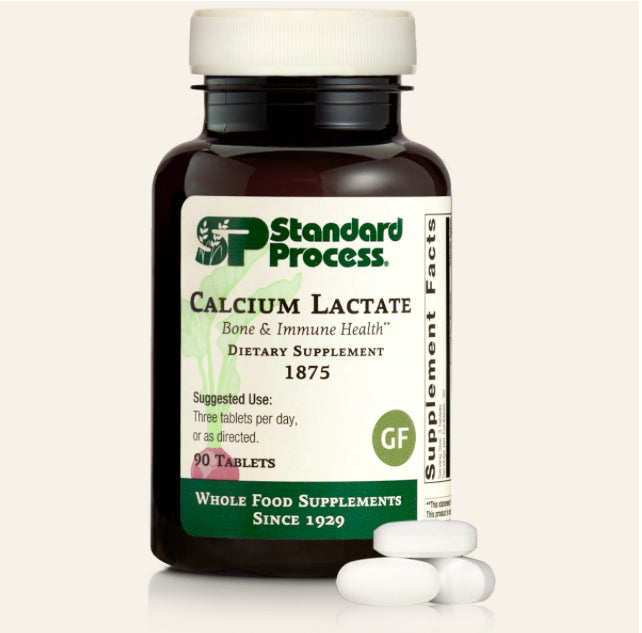
Calcium Lactate, 90-360 Tablets
Calcium Lactate, 90-360 Tablets
Couldn't load pickup availability
- Supports muscle and nerve function
- Supports normal functions of cells and cell membranes
- Supports normal blood clotting process
- Supports proper functioning of enzyme systems
- Supports and helps maintain healthy bone density and remodeling
- Provides support in the immune system response function*
- Adequate calcium as part of a healthful diet, along with physical activity, may reduce the risk of osteoporosis in later life.
- Excellent source of calcium
- Good source of magnesium
- Vegan, vegetarian, gluten-free, non-dairy, non-soy
Why Calcium Lactate Works
Calcium Lactate contains 20% of the daily recommended value of calcium (from calcium lactate and stearate) and 12% of the daily recommended value of magnesium.
Both of these minerals are essential for a number of metabolic functions and processes in the body, yet much of the U.S. population struggles to meet the recommended amount of either mineral.
Calcium Lactate for Maintaining Healthy Bone Density
Bone remodeling (bone turnover) is a continuous cycle of bone breakdown by osteoclasts in areas of the body where bone isn’t needed, and bone rebuilding handled by osteoblasts. ¹In other words, bone itself undergoes continuous remodeling, with constant resorption and deposition of calcium into new bone. The balance between bone resorption and deposition is important for healthy bones, and it changes with age.
Both calcium and magnesium are critical to bone health. 99% of the body’s calcium supply is stored in the bones and teeth where it supports normal and healthy bone structure and function.Taking an additional calcium supplement can help increase the body’s supply of calcium.
Magnesium also contributes to the structural development of bone, with 50% to 60% present in the bones. <sup> 3 </sup> In particular, magnesium is involved in bone formation and influences the activities of osteoblasts (bone rebuilding) and osteoclasts (bone breakdown). <sup> 4 </sup>
Calcium Lactate for Immune System Health
Both calcium and magnesium are involved in supporting aspects of the body’s healthy immune system. Calcium (Ca²⁺ ) signals control various aspects of cell functioning such as T lymphocytes. T lymphocytes – along with other immune cells – respond to foreign particles in the body.These T cells, which are made in bone marrow and are essential for cell-mediated immunity, need a sustained Calcium ion flow for regulation, activation, and proliferation.
Emerging research indicates magnesium may also play a role in the human immune system response such as through magnesium transporters. A number of magnesium transporters have been identified in immune cells such as Magnesium transporter 1 (MagT1). <sup> 6</sup> MagT1 is expressed in the spleen, thymus, T and B lymphocytes, suggesting that MagT1 may be involved in the human immune system functions. <sup> 7</sup>
Does lactate come from milk?
The term “lactate” sounds similar to “lactose,” and you may assume that it comes from cow’s milk, but that is not the case. Calcium Lactate is a non-dairy product.
The “lactate” in Calcium Lactate is a calcium salt of lactic acid. Lactic acid is a byproduct of the bacterial fermentation of sugar. In this case, does not come from milk.
References
1. Wardlaw GM, Hampl JS, DiSilvestro RA. Perspectives in Nutrition. 6th edition. New York, NY: McGraw Hill Higher Education; 2004.
2. Committee to Review Dietary Reference Intakes for Vitamin D and Calcium, Food and Nutrition Board, Institute of Medicine. Dietary Reference Intakes for Calcium and Vitamin D. Washington, DC: National Academy Press, 2010.
3. Institute of Medicine (IOM). Food and Nutrition Board.Dietary Reference Intakes: Calcium, Phosphorus, Magnesium, Vitamin D and Fluoride. Washington, DC: National Academy Press, 1997.
4. https://ods.od.nih.gov/factsheets/Magnesium-HealthProfessional/
5. Oh-hora M, Rao A. Calcium signaling in T-lymphocytes. Curr Opin Immunol. 2008 June; 20(3): 250–258. 6
. Schmitz C, Perraud AL. Chapter 26 - Magnesium and the Immune Response, Editor(s): James F. Collins. Molecular, Genetic, and Nutritional Aspects of Major and Trace Minerals, Academic Press, 2017, Pages 319-331. 7
. Al Alawi AM, Al Badi A, Al Huraizi A, Falhammar H. Chapter Six - Magnesium: The recent research and developments. Editor(s): NA Michael Eskin. Advances in Food and Nutrition Research, Academic Press, Volume 96, 2021, Pages 193-218.
Suggested Use:
Three tablets per day, or as directed.
Nutrients & Ingredients
Each Serving Size (3 Tablets) contains: Calories 5, Total Carbohydrate 1 g, Calcium 260 mg, Magnesium 50 mg. Ingredients: Calcium lactate, magnesium citrate, and calcium stearate.
Please consult the actual product label for the most accurate product information.
*These statements have not been evaluated by the Food and Drug Administration. These products are not intended to diagnose, treat, cure, or prevent any disease.
Share