
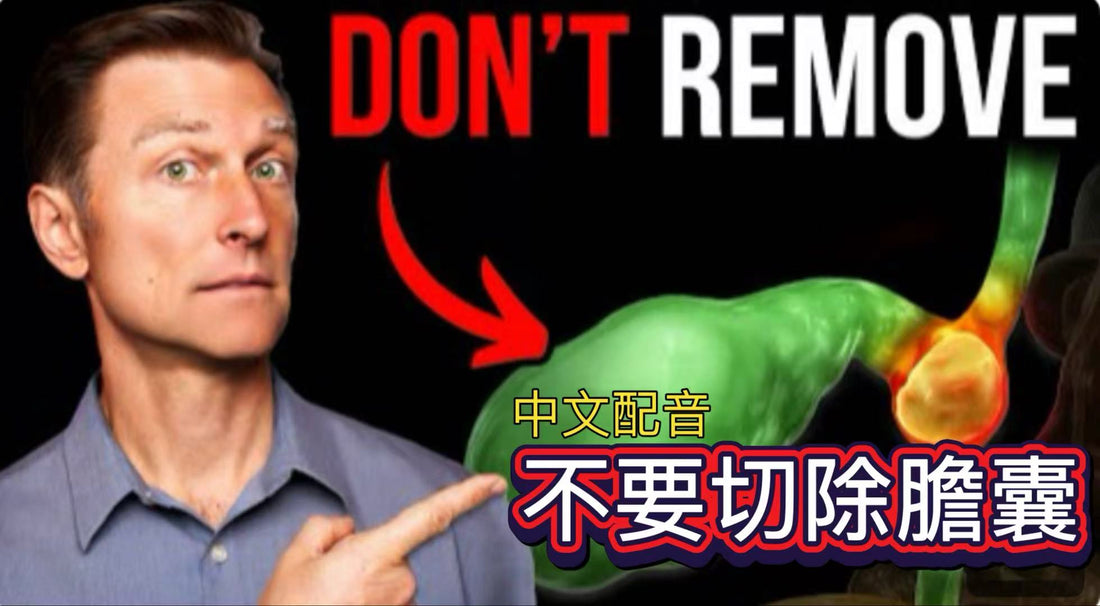
Never have your gallbladder removed.
Share
Never have your gallbladder removed.
In this video, we'll discuss why you should absolutely not remove your gallbladder unless it's absolutely necessary. Today, I'll talk about six lies surgeons tell you, and the truths you need to know. I'll also cover the best foods to eat if you have gallbladder problems. Cholecystectomy is one of the most common surgeries, especially in the United States. I think if I remember correctly, there are over 3,000 gallbladder removal surgeries performed every day in the US.
What is the gallbladder and what are its functions? Is it just a small pouch sitting under your liver that stores bile? The answer is no. It has many important functions. First, bile is produced by the liver and then flows down through a small tube to be stored in this small pouch called the gallbladder.
Okay, let's first understand the function of the gallbladder:
First, the gallbladder is where bile is stored. It's a place where bile becomes concentrated. Why do you need it to become concentrated? Because when you eat food, the gallbladder is supposed to contract and release all that bile to help you break down fats. Then, the pancreas, located here, can release its enzymes to move on to the next stage. I'm not just talking about fats, I'm talking about fat-soluble vitamins, vitamins A , D , E , K1 , K2 . I'm also talking about Omega-3 fatty acids. To be able to extract any of these from your food, you will need bile. And that's one of the purposes of the gallbladder—to concentrate it. If you don't have a gallbladder, your liver will still produce bile, but it won't be stored. It just flows slowly into the small intestine through this little tube. Therefore, this will affect your ability to digest and absorb these important fats.
The gallbladder's second function is to help regulate bile release. This way, you can get bile when you need it and not when you don't.
The gallbladder's third function is to help regulate excess cholesterol. Did you know that the gallbladder and its bile are the main regulators of excess cholesterol? Many people have cholesterol problems, but they never have their gallbladder checked. Instead, they are prescribed medication.
Next is the gallbladder's antimicrobial function. This concentrated bile helps break down certain bacteria and viruses.
In addition, bile in the gallbladder helps control hunger or helps regulate blood sugar.
Next is detoxification. Toxins from the liver rely on bile to help eliminate them. In addition, bile also promotes the release of glutathione, one of the most powerful antioxidants in your liver.
Therefore, you can see that the gallbladder is more than just a bag. Bile can also affect your thyroid gland because it can help your thyroid hormones function better.
This is why people with hypothyroidism eventually need to consume more bile salts or improve their bile salt intake, and I will explain how to do this to improve thyroid function. Therefore, if you have insufficient thyroid hormones, this could be a reason why you have gallbladder problems or even gallstones.
Gallstones are a major reason people have their gallbladders removed. So, what are gallstones? Gallstones are usually highly concentrated cholesterol stones. This is caused by too much cholesterol. So, should we just lower our cholesterol? Here's another part you really need to understand. High levels of highly concentrated cholesterol combined with very little bile salts then form gallstones. So actually, gallstones are caused by a lack of bile salts.
The Lies of Gallbladder Removal
Now let's talk about some lies that surgeons tell their patients, lies that are absolutely not true.
But let's start with the first one. Uh, when you have gallbladder problems, there are no other options. Right? Your gallbladder is threatening your life. You need to get rid of it. No other options. That's a lie. There are other options. You can use oral bile salts. Yes, that's right, taking bile salts. One study I read found that 50% of people's gallstones dissolved within two years. In another study, the rate was slightly lower within six to twelve months. 80% . There are other forms of treatment. This is EDTA . This is a chelating agent. Chelating agents mean "claws." You can take it, and it binds with calcium and other minerals, locking them in and then expelling them from the body. I want to emphasize that oral bile salts have very few side effects, especially compared to gallbladder removal. There is also an alternative: mechanical gallstone extraction without removing the gallbladder. I'm not saying surgery shouldn't be performed in some situations, as it can be life-threatening. You need full informed consent to understand all the options, risks, and side effects. Finally, there is extracorporeal shock wave lithotripsy (ESWL). This uses sound waves to break up gallstones.
two. Gallbladders that produce gallstones are diseased. Is this truly a disease, or a symptom of some other problem? Did your doctor tell you what causes gallstones? Unfortunately, they don't know much about dietary therapy, especially its relationship to the gallbladder and bile release. That's why I made this video.
Third, you cannot prevent gallstones through diet alone. So, let's say you're talking to a doctor about diet, and they tell you that diet doesn't actually have much to do with it. Then I would ask them, what exactly causes gallstones, right? How can you be so sure that the root cause of gallstones isn't diet, when the gallbladder and its bile are actually part of your digestive system? What else could cause that?
Fourth, gallbladder removal does not cause complications. Wow, that's interesting, because many people I know, including in practice, have experienced significant complications after gallbladder removal. In one study, up to 40% of people who underwent gallbladder removal surgery experienced at least one or more symptoms within 25 years after the procedure . What are some of those common symptoms? Diarrhea, gastritis, depression, anxiety, and an increased risk of cancer. If you have your gallbladder removed, your risk of colon cancer increases by 11% . Your risk of liver cancer increases by 60% . Your risk of pancreatic cancer increases by 22% . And your risk of bile duct cancer increases by 45% . The question is, why? Well, when you remove your gallbladder, you no longer have that concentrated bile regulation. But one of the main factors is bile acid malabsorption. This usually happens in what we now face: excess bile is released from the liver into the small intestine.
So now you've been prescribed a medication that slows down bile release. This isn't without side effects, as current side effects include constipation, and a host of other problems.
five. Post-colectomy syndrome is controversial. Actually, it's not controversial at all. Check Wikipedia. There are many issues when they remove the gallbladder.
Sixth, even if your gallstones are caused by pregnancy, you still need surgery. Now, if someone tells you this, I'll definitely seek a second opinion because estrogen has a huge impact on gallstones. Once you've successfully navigated pregnancy and your estrogen levels normalize, will the gallstones remain or disappear? What causes gallstones? The same goes for birth control pills, right? When your estrogen levels surge, gallstones suddenly appear. Yes, that's the effect of estrogen. Estrogen inhibits the production of bile salts and the release of bile salts from the gallbladder. That's its function. Another factor is being overweight. The heavier you are, the higher your risk of gallstones because when you're overweight, you have other problems, such as blood sugar issues. That's why people with diabetes are also more prone to gallstones. But the biggest, most obvious reason people have gallstones is high levels of insulin, especially when you have insulin resistance. I've probably recorded over 300 videos about insulin resistance, showing how it leads to fatty liver, weight gain, and high blood pressure. What happens next is that your liver doesn't produce enough bile, and the gallbladder itself weakens. It can't fully contract to release bile. So how does this happen? Well, this person is consuming too many carbohydrates or sugars, seed oils, and they're eating too frequently. There's another argument supporting this. People who do intermittent fasting don't eat as frequently, and their bile is more concentrated, which helps dissolve gallstones. This is the main root cause of gallstones, and the important corrective action is to adopt a low-carbohydrate diet and intermittent fasting. This is very, very important. You have two different types of bile. You have bile made by your liver, but you also have bile made by microbes. Anything that disrupts the microbes, like antibiotics, will also affect your bile. When people take antibiotics, they are more likely to have gallstones. When people take antibiotics, they gain weight, because one of the symptoms of gallbladder removal is weight gain, which is quite interesting. Another reason for reduced bile is adopting a low-fat or low-cholesterol diet. Because do you know what bile is made of? Cholesterol. That's where it comes from. If you don't consume any cholesterol at all,
You might be deficient in certain nutrients, which prevents you from producing bile. This is why people on low-fat diets are more prone to gallstones than those on non-low-fat diets. This is quite interesting. How can we increase bile production and prevent gallstones? This leads to another question: Which type of fat can prompt the liver to produce more bile, or synthesize more bile from all possible fats? Because there are many types of fat. Clearly, fatty fish have the strongest effect on bile production, which makes evolutionary sense because these fatty fish contain some very important substances. DHA , an Omega-3 fatty acid, but there are also other fatty acids.
From meat and even olive oil. Of course, I wouldn't recommend seed oils, as they can cause inflammation. But another factor that prompts the liver to produce more bile is cholesterol-rich foods like butter, eggs, shellfish, seafood, and liver. Egg yolks and liver happen to be rich in choline. Choline is another key nutrient that helps produce bile. In fact, if you supplement with choline, it's a bit like ingesting a form of bile that helps you digest fats. Now, we've talked about the liver, but are there any ways to help shrink your gallbladder to stimulate it to release more bile? This would also be some of the fats and proteins I've discussed. But there are others, such as bitter green vegetables, arugula, radishes, and even celery. Adding sauerkraut can increase bacteria, which can produce extra bile salts to help clear bile and aid digestion. Even citrus fruits like lemons and limes can help clear bile. Increasing acidity also works; adding apple cider vinegar or betaine hydrochloride can increase acidity, which will prompt the gallbladder to release bile because you need strong acid in your stomach to trigger this reaction, and insufficient acidity can prevent things from working properly. In other words, your stomach problems are causing gallbladder problems.
Your current diet is actually very healthy, not only beneficial for gallstones but also helpful in supporting your gallbladder. However, I challenge you to investigate and research whether it's acceptable to consume bile salts after each meal, such as TUDCA and purified bile salts. I hope you gain a better understanding of your gallbladder and its importance. Now that you understand the importance of the gallbladder, the next most important thing is to understand the actual importance of bile. For information on this, please watch the video here.